Oct. 16, 2026
Inside a Central Florida Sheriff’s Office Bi-Fuel Propane Fleet Program
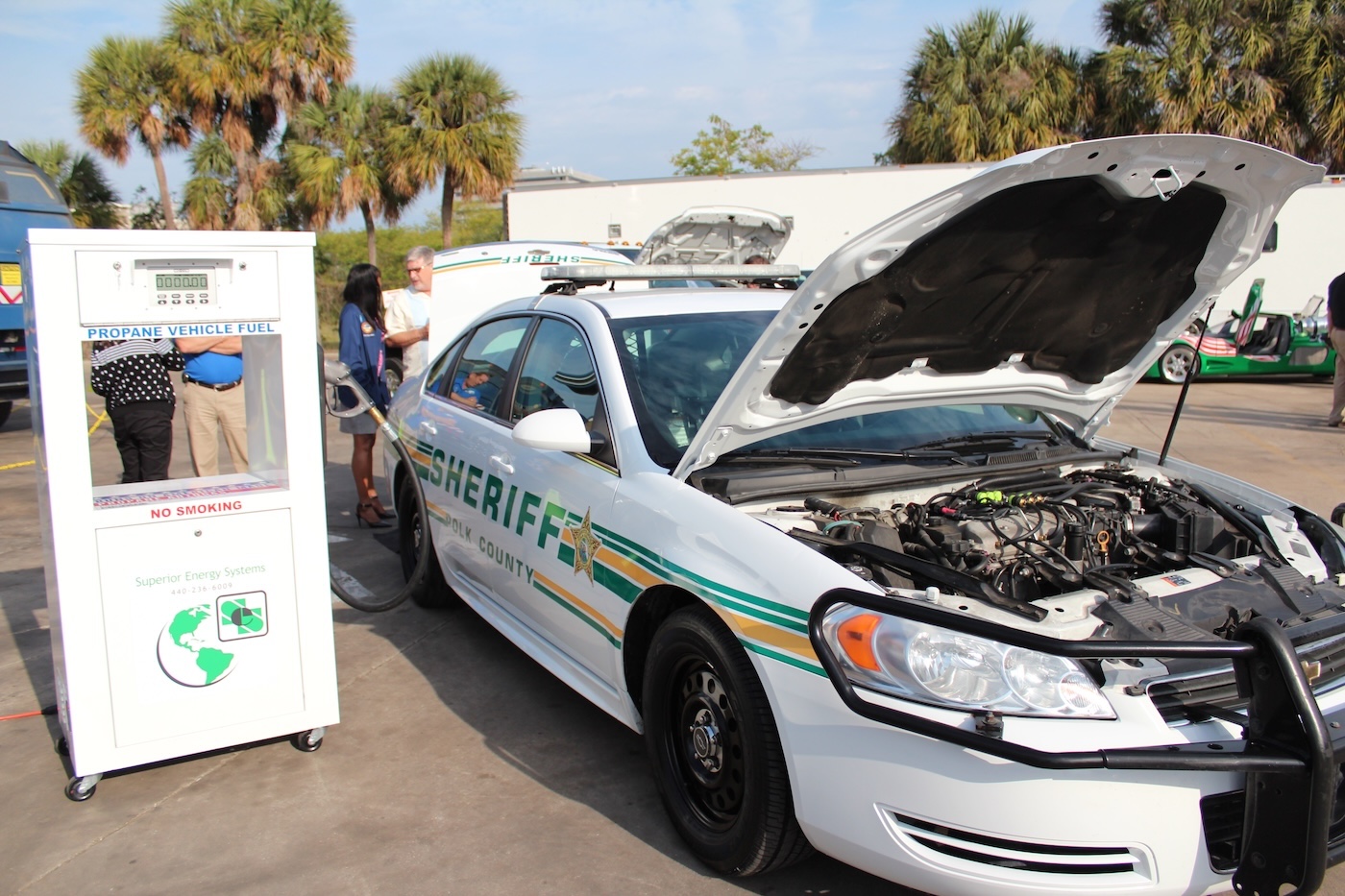
For more than a decade, the Polk County Sheriff’s Office has operated a bi-fuel propane fleet program designed to reduce fuel costs and extend vehicle driving range for patrol operations across Polk County, which spans 2,010 square miles in central Florida.
Today, the Sheriff’s Office operates 348 bi-fuel vehicles. Patrol vehicles, primarily Ford Explorers and Dodge Chargers, were selected for conversion due to the high mileage they accrue.
Propane’s domestic production and abundant supply contribute to its appeal. The fleet’s use of propane also maintains the high performance required for law enforcement operations to protect and serve citizens.
Evaluating Alternative Fuel Choices
Early in the evaluation process, the Sheriff’s Office, a longtime member of the Tampa Bay Clean Cities Coalition, researched how other law enforcement agencies were using alternative fuels, focusing on operational and financial impacts including safety, potential cost savings, engine wear, and vehicle range. Because Florida did not have any comparable propane fleet programs, the agency examined operations in Georgia, Alabama, Virginia, and North Carolina.
As planning progressed, the Sheriff’s Office recognized that patrol officer confidence would be critical to successful implementation. One of the officers’ earliest concerns involved vehicle safety, particularly whether propane tanks could withstand gunfire or other damage encountered during law enforcement operations.
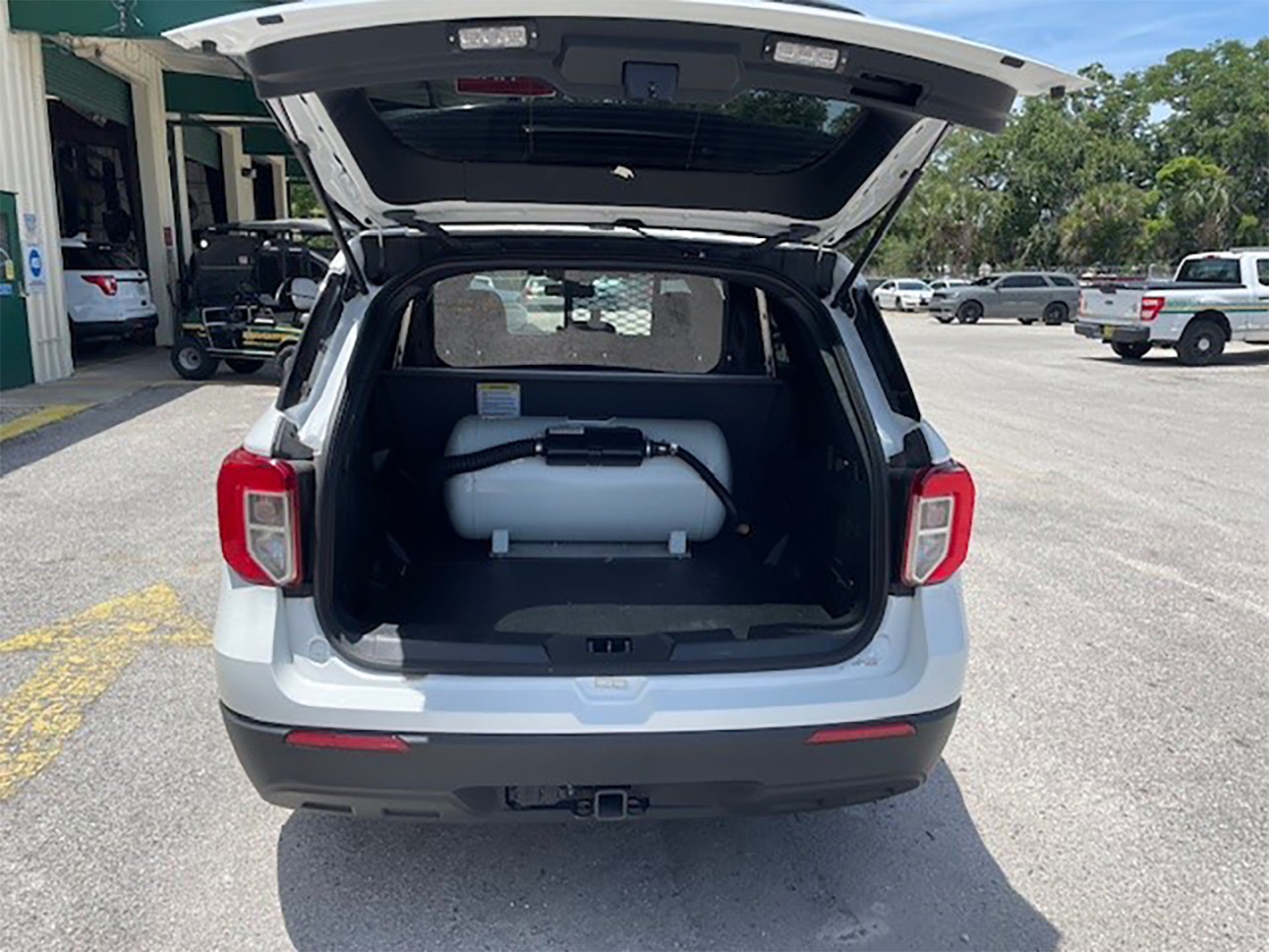
Propane tanks mounted in the spare tire well isolate valves and hoses from the passenger compartment, enhancing safety. Photo from the Polk County Sheriff’s Office.
To address these concerns, the agency reviewed case studies in which propane tanks were subjected to gunfire from various weapon calibers. The agency then conducted its own safety testing under Sheriff Grady Judd’s instruction, firing a range of available firearms on propane tanks. The tanks performed safely, with no instances of ignition or explosion. The only case of penetration involved an AR-15 (.223-caliber) rifle, which caused vapor leakage but no fire.
The risk of ignition is low, as propane requires a secondary ignition source after a breach. Its autoignition temperature is approximately 940°F, compared to gasoline’s 430°F–500°F.
Mounting the propane tank in the patrol vehicle’s spare tire well also enhanced safety by isolating valves and hoses from the passenger compartment.
This combination of research, case study review, and safety testing helped build confidence as the program moved toward implementation.
Building the Fleet
The Sheriff’s Office launched its propane conversion program in 2015 with 47 Chevrolet Impalas and steadily expanded the initiative over the next decade.
In 2025, the agency converted 75 Ford Explorers, marking the program’s most recent expansion.
Until 2019, Florida offered rebates of up to $25,000 per vehicle, covering up to 50% of the costs associated with the conversion, purchase, or lease of an eligible vehicle. A separate federal incentive program returned approximately 50 cents per gallon on propane fuel purchases.
Performance in the Field
More than a decade after the first conversions, officers report comparable performance in propane and gasoline operation. According to fleet administrator Brent Degel, the bi-fuel system performs effectively in patrol operations, while its bi-fuel capability provides greater operating range than dedicated propane or gasoline vehicles.
Vehicles start on gasoline during cold starts before automatically transitioning to propane once the engine reaches operating temperature. “You can’t tell when it transitions,” Degel said.
Degel noted that propane systems are highly reliable and may also reduce engine strain during extended idling, which helps maintain vehicle performance over time and boost the longevity of the engine.
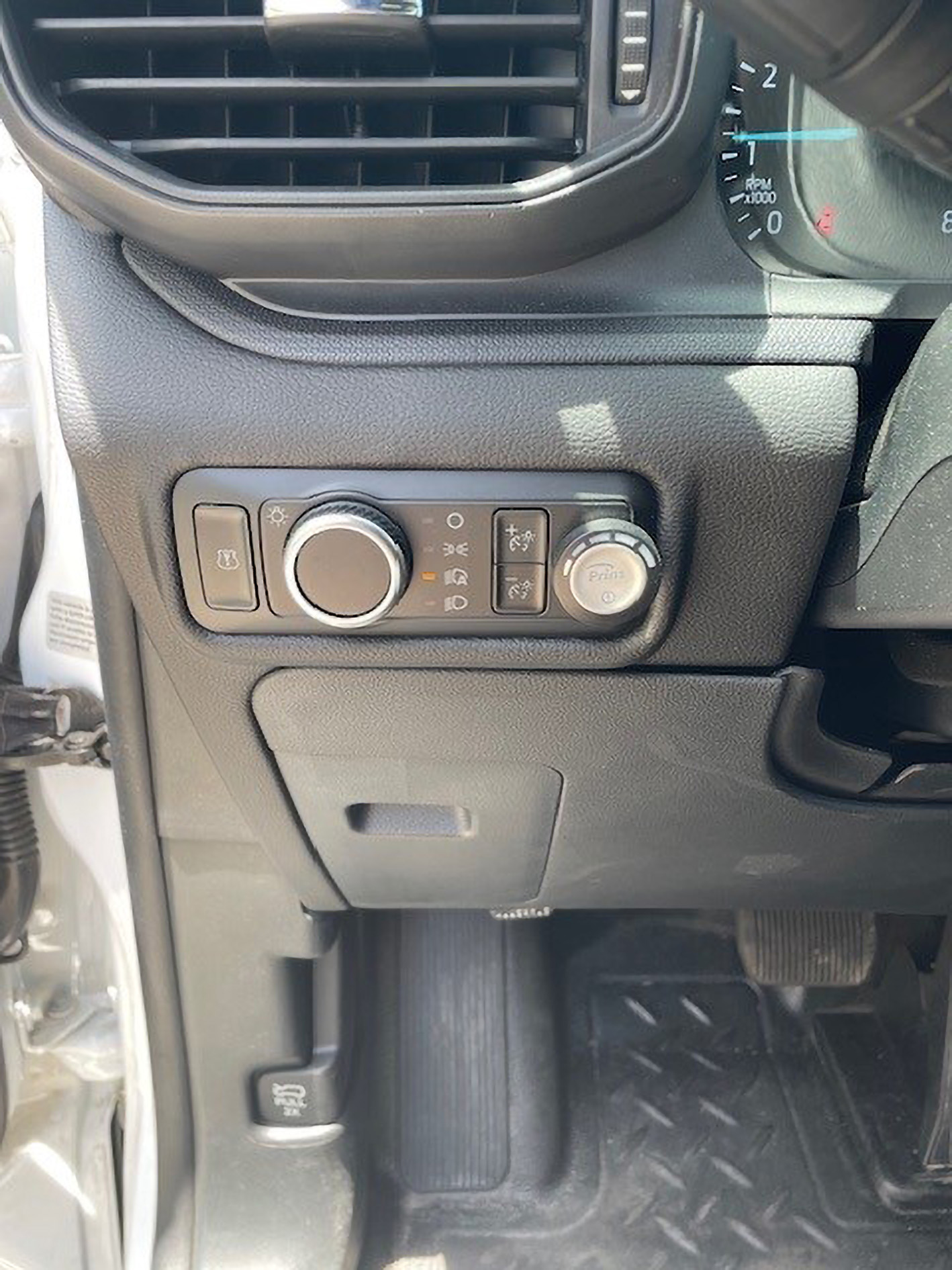
A button enables the driver to easily switch between fuels. Photo from the Polk County Sheriff’s Office.
Fueling Operations
While cost savings were the primary driver of adoption, operational convenience quickly became a key benefit.
The agency maintains eight propane fueling locations throughout the county, primarily at substations and nearby county fueling facilities. Several of these sites also offer gasoline. Because officers typically begin their shifts at substations with fueling access, they can fuel before heading into the field, minimizing the need to stop for fuel during a shift.
Fueling with propane is similar to gasoline fueling, except the nozzle is threaded onto the vehicle’s propane tank.
Bi-fuel vehicles are equipped with separate propane and gasoline fueling systems, allowing drivers to switch between fuels with the push of a button. Many officers can complete an entire shift without fueling, and those who primarily operate on propane may go several months before needing to use gasoline.
“Running all night and not having to fill up is a huge benefit,” Degel said.
Measuring Operational Cost Savings
The Sheriff’s Office targets an 80/20 propane-to-gasoline fuel use ratio. Most officers operate on propane for 70%–80% of their driving, while some run almost entirely on propane.
The fleet averages about 18,000 miles per vehicle annually and consumes approximately 250,000 gallons of propane each year. Propane operations save roughly five cents per mile.
Degel noted that propane has a lower energy density than gasoline, requiring more fuel to produce the same amount of energy. The bi-fuel vehicles average about 10 miles per gallon on propane and 13 miles per gallon on gasoline.
To calculate overall savings, the agency applies a 1.353 energy equivalency factor (gasoline gallon equivalent). At a bulk propane cost of approximately $1.70 per gallon, this translates to an effective cost of about $2.30 per gasoline gallon equivalent.
Partnerships Behind the Program
The Sheriff’s Office developed its propane fueling infrastructure in partnership with Ferrellgas, supporting expansion across the county.
For vehicle conversions and technical support, the agency has worked closely with Alliance AutoGas, part of Blossman Gas, since 2020. Degel described the company as “an excellent partner” for troubleshooting and warranty support.
Degel noted that the agency encountered significant challenges early in the program due to inconsistent support from the conversion kit manufacturers it was working with at the time. “There was a lack of support for a program this size,” he said, explaining that those manufacturers did not have sufficient technical support personnel in place to efficiently troubleshoot installation issues or address warranty claims involving failed component parts in the conversion kits.
When Alliance AutoGas began working with the Sheriff’s Office in 2020, it provided strong technical and warranty support, which helped the agency resolve such issues quickly and improve day-to-day reliability.
Looking Ahead
Agency leaders say the program has met its primary objectives over the past decade—delivering fuel cost savings, operational flexibility, and reliable patrol performance across one of Florida’s largest counties.
“We have saved countless taxpayer dollars through the years with this implementation and didn’t have to sacrifice safety and performance one bit,” Sheriff Grady Judd said.
With nearly 350 bi-fuel vehicles in service and a countywide fueling network in place, officials say the program has a strong operational foundation. If state or local incentives return, officials say the agency would be well positioned to resume expansion.